

Is Singapore Airlines Business Class Worth the Connection from Kuala Lumpur?

Singapore Airlines has just launched another KrisFlyer Global Redemption Sale. On cue, I’ve received a few emails asking whether this is the moment to book Singapore Airlines, and I actually think it's a decent time for family-focused vacation bookings.
There is one important catch, the current 15% sale is not a Business Class sale, but that is not necessarily a bad thing. There is nothing wrong with redeeming miles for Economy or Premium Economy. The points and miles ecosystem has conditioned people to believe that every respectable redemption must involve Business Class, but that is simply not how most families travel.
Four return Business Saver awards from Kuala Lumpur to Japan require 456,000 KrisFlyer miles. For Europe, the figure rises to 912,000 miles before taxes. Accumulating that balance could take years, while finding four Saver seats on the same flight may be even harder.
I also plan to address whether flying Singapore Airlines is worth connecting through Changi instead of taking a suitable nonstop flight from Kuala Lumpur. The correct comparison is not Singapore Airlines against another airline’s reputation. It is one complete itinerary against another: departure time, arrival time, total duration, connection, aircraft, cabin and the price or miles actually available.
What This Sale Means for Families
The current KrisFlyer Global Redemption Sale runs from 8 to 20 September 2026 for eligible travel between 1 November 2026 and 31 May 2027, subject to route-specific travel periods and blackout dates.

The discount applies to selected Singapore Airlines Economy Saver awards, together with selected Premium Economy Saver awards between Singapore and the United States. Business Class is excluded.
Promotional awards also cannot be changed or cancelled, waitlisting is unavailable, and taxes and fees are not discounted. Families should therefore treat the sale as a reason to search, rather than an instruction to book whatever appears.
The savings become more meaningful when multiplied across several passengers. A 15% discount across four identical awards saves the equivalent of 60% of one standard award. That is certainly worth considering if the dates and itinerary already suit the family.
If your objective is specifically to redeem discounted Business Class, keep an eye on KrisFlyer Spontaneous Escapes instead. I have explained how that monthly promotion works in a separate article. It can include Business Class, but its restricted routes, dates and availability make it difficult to rely upon for four seats during school holidays.
Through-Booked Connection vs Positioning Flight
Booking Kuala Lumpur–Singapore–Tokyo as one Singapore Airlines itinerary is not the same as buying a separate flight to Singapore.
On a through-booked itinerary, baggage should ordinarily be checked to the final destination. If the Kuala Lumpur flight is delayed and the connection is missed, Singapore Airlines is responsible for getting the passenger to the destination under the ticket’s conditions.
The KrisFlyer award chart also gives Malaysians little reason to start the journey separately in Singapore. A one-way Business Saver award to Japan costs 54,500 miles from Singapore and 57,000 miles from Kuala Lumpur. For Europe, it is 108,500 miles from Singapore and 114,000 miles from Kuala Lumpur.

I would not accept self-transfer risk merely to save 2,500 miles to Japan or 5,500 miles to Europe.
A separate AirAsia positioning flight looks quite different. AirAsia operates from KLIA Terminal 2 and arrives at Changi Terminal 4, while Singapore Airlines primarily uses Terminals 2 and 3.
Terminal 4 is not connected to the other terminals by Skytrain. If the baggage is not checked through, the family must clear immigration, collect its bags, take the public shuttle to Terminal 2, move to Terminal 3 if necessary, check in again and clear departure formalities.

The shuttle journey itself takes around 10 minutes. Immigration, baggage delivery and the second check-in process are what consume the time.
I would not schedule this as a two-hour connection. With checked baggage and children, I would want at least three hours, especially given AirAsia's notorious delays. For an expensive long-haul redemption, five or six hours, or even an overnight stay would be more sensible.
Separate positioning can still work when the Singapore-origin fare is substantially cheaper, through availability does not exist or Singapore is intentionally part of the holiday. Just remember that a RM200 AirAsia ticket does not make the missed-connection risk worth RM200.
Three Routes, Three Different Answers
The examples below use representative schedules checked in September 2026. All times are local, aircraft can be substituted, and cash fares change constantly. The only fair pricing comparison is between options that are actually bookable on the same dates.
Scenario A: Bangkok (Short Regional Holidays)

The Singapore Airlines aircraft and cabin are clearly better. However, the nonstop passenger leaves Kuala Lumpur one hour and 45 minutes later and still reaches Bangkok 50 minutes earlier. The one-hour Changi connection is also too short to become a proper lounge visit. It is simply another boarding process placed between Kuala Lumpur and Bangkok.
For a three- or four-night family holiday, I would take the suitable nonstop unless Singapore Airlines is substantially cheaper or its schedule solves a specific problem. A flat bed is pleasant, but hardly necessary for a short daytime flight.
Scenario B: Tokyo (More Medium-Haul-ish)

The Singapore Airlines itinerary lands at Haneda rather than Narita, which can save time once you reach Tokyo. However, it also requires leaving Kuala Lumpur almost three hours earlier and managing a fairly tight one-hour connection.
For a family, I would probably take the Malaysia Airlines nonstop if the price or miles were reasonably close. There is one fewer flight to board, no late-night transfer through Changi and, if the A330neo operates, Singapore Airlines no longer has an obvious seat advantage.
The SQ option can still make sense if the current redemption sale produces meaningful savings for four Economy or Premium Economy seats, or if Haneda is substantially more convenient for your plans. As always, check the aircraft shown during booking—and check again closer to departure—because equipment substitutions remain possible.
Scenario C: London (Long-Haul Flights)

This is the cleanest illustration of the connection tax. Both flights arrive in London at 05:55, but Singapore Airlines requires the passenger to leave Kuala Lumpur four hours and 45 minutes earlier. The A380 cabin is more polished and the three-hour Changi stop provides enough time for a proper SilverKris Lounge visit. However, Malaysia Airlines offers a full-flat seat and an uninterrupted overnight journey.
Avoiding a connection can itself be the premium experience, particularly when travelling with children. At 114,000 miles, a Singapore Airlines Saver award may be compelling when the nonstop fare is expensive or no direct award exists. At 147,500 miles for Advantage, I would need a much stronger reason to accept the additional journey time.
How I Value a Changi Connection
I enjoy Changi, so my tolerance for connecting is probably higher than that of someone who simply wants to reach the destination. I mean come on, what's there not to love about Changi? Great F&B. Great Oneworld lounges. Great waterfall.

Nonetheless, a one-hour connection is not a ground experience. I rarely book myself onto these short layovers but when I do, I check the onward gate and continue towards it.
With two or three hours, I can have a proper meal at Jewel if I wish to, take a shower, charge my devices and board the long flight feeling refreshed. That is when the connection can genuinely become part of the holiday.
Beyond four or five hours, I become more demanding. Changi is excellent, but it is still a waiting room with better laksa. The only exception is lounge hopping, which is great if you're flying Oneworld, but less so when you're flying Singapore Airlines or any other Star Alliance carrier.
Speaking of which, Singapore Airlines Business Class passengers can use the SilverKris Business Class Lounge at Changi. At other airports, they may be directed to a SilverKris lounge, another Star Alliance carrier’s lounge or a contracted facility. The Business Class ticket does not provide unrestricted entry to every Star Alliance lounge, so always check the designated lounge for the flight.
I have reviewed the Terminal 3 SilverKris Lounge separately, including its food, showers and seating.

Of course, it goes without saying that Economy and Premium Economy passengers do not ordinarily receive lounge access through the ticket, unless you happen to have status such as KrisFlyer Elite Gold or PPS Club status. This is where the UOB and CIMB credit card strategies regularly discussed on Refined Points become useful.
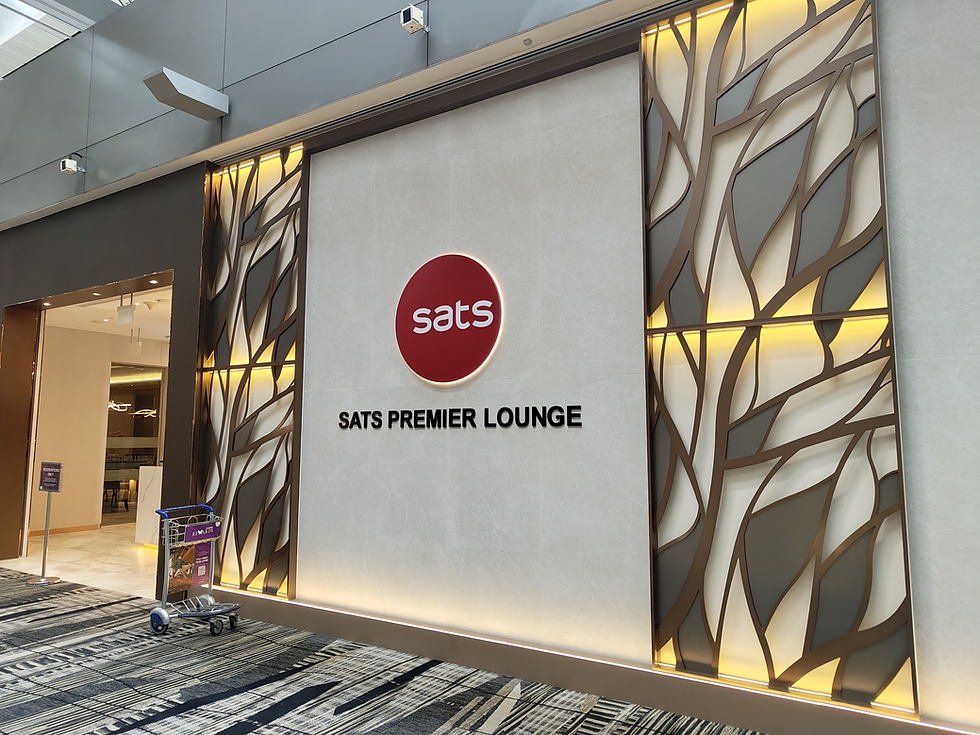
The renovated SATS T3 Lounge for example is pretty decent in my opinion.

If an eligible lounge entitlement is already included with the card, use it. Just check guest and child rules first, because one principal-cardholder visit does not automatically admit the entire family.
Best Credit Cards for KrisFlyer Miles
I intend to keep this section short as it's a condensed version of what you can find across my blog.
For local spending, the KrisFlyer AMEX Platinum, CIMB Visa Infinite, CIMB Preferred Visa Infinite and UOB Visa Infinite remain the main cards I would consider. The KrisFlyer AMEX Platinum earns 1 MPR on eligible Singapore Airlines spending, but the miles are credited directly into KrisFlyer. CIMB and UOB points preserve more flexibility until they are converted.
For overseas spending, I would lean towards the UOB Visa Infinite or UOB PRVI Miles Elite. Eligible Singapore Airlines purchases charged in SGD can earn around 1 MPR through UOB, while keeping the points transferable rather than immediately locking them into KrisFlyer.
This is also why my criticism of Enrich should not be mistaken for blind Singapore Airlines loyalty. Lock-in is still lock-in regardless of the airline logo.
Final Thoughts
The ongoing KrisFlyer Global Redemption Sale is a useful opportunity for Malaysian families, even though Business Class is excluded.
It can take years to accumulate enough miles for four premium-cabin seats, while securing all four on the same flight can be even harder. There is nothing wrong with redeeming Economy or Premium Economy if it gets the entire family onto the trip.
For short regional holidays, I would usually take the suitable nonstop. For Japan, Singapore Airlines becomes more competitive when the aircraft, Haneda arrival or Saver availability improves the journey. On long-haul routes, its Business Class experience may justify the connection, but a good nonstop can still win by returning several hours to the family.
KrisFlyer Spontaneous Escapes remains worth monitoring when discounted Business Class is the objective, but it should not be treated as a guaranteed family-travel strategy.
I would also strongly favour a through-booked Kuala Lumpur itinerary over a separate AirAsia or Batik Air Malaysia positioning flight. The small mileage difference is normally worth paying for through-checked baggage, connection protection and fewer opportunities for the journey to unravel.
It's worth mentioning that positioning flights via Malaysia Airlines isn't a bad idea, given that MH arrives at Changi Terminal 2, but you'll still need to account for self-transfer timing, which is the time you'll take collecting your baggage and rechecking in at the departure check-in area.
Singapore Airlines Business Class can absolutely be worth connecting through Changi. It is not worth it simply because Singapore Airlines has the stronger reputation. The best miles redemption is the one that improves the family’s trip, not merely the flight.


Comments